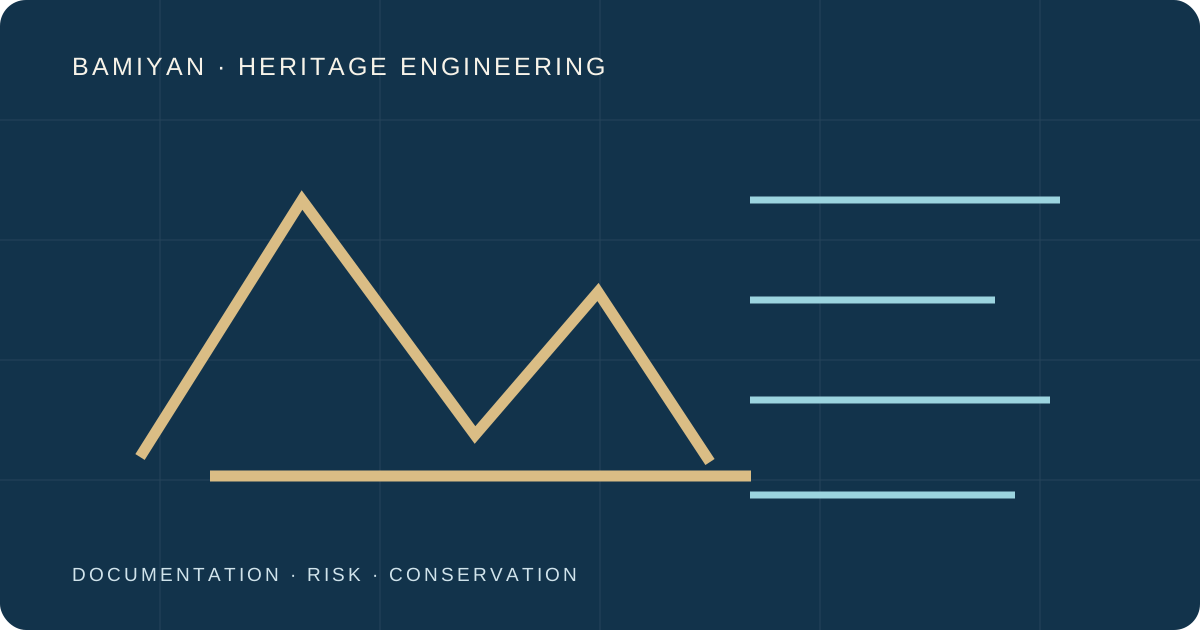
UNESCO published a procurement notice on 18 October for documentation and risk assessment near heritage sites in Afghanistan's Bamiyan Valley, with a later deadline extension to 1 November. The request calls for archaeological knowledge, geohydrological assessment and careful documentation of development work close to sensitive sites. It is a real procurement step rather than evidence that a specialist has already been contracted or conservation works completed.
What exactly is UNESCO seeking?
The procurement listing AFG26RFP013 requests integrated technical services to document and evaluate work near the area's cultural and archaeological remains. It describes a need to account for construction activity, unstable ground, water-related hazards and potential damage to significant remains.
The listing calls for geohydrological and archaeological expertise and improved monitoring tools. Those terms set the scope of requested services, not completed measurements of landslide risk or a newly delivered master plan.
Sources: UNESCO Bamiyan risk assessment deadline extension: AFG26RFP013 · UNESCO Bamiyan original AFG26RFP013 procurement notice
Why documentation matters around Bamiyan
The Bamiyan Valley World Heritage property contains the niches of the giant Buddha statues destroyed in 2001, numerous cave sanctuaries, monastic sites and later-period fortified settlements. The valley is a cultural landscape, not just one damaged monument.
Construction and settlement changes can affect archaeological settings even without directly touching a protected wall. Baseline surveys and recorded conditions help conservation experts distinguish new damage, old deterioration and the potential impact of future development.
Sources: Bamiyan Valley World Heritage property · Bamiyan cultural landscape and threats
What changed in the tender deadline?
The initial UN Global Marketplace listing gave 29 October as its deadline; a subsequent notice under the same reference described an extension to 1 November. The public listing contains different time displays, so an article should not invent a single final local clock-time without checking the official procurement platform.
The important verified distinction is that the procurement opportunity had a deadline, not that a selected contractor or winner was publicly announced on that day. Bids, evaluation and any eventual award must be separately verified.
Sources: UNESCO Bamiyan risk assessment deadline extension: AFG26RFP013 · UNESCO Bamiyan original AFG26RFP013 procurement notice
The World Heritage site is still classified as endangered
UNESCO's World Heritage Committee retained Bamiyan on the List of World Heritage in Danger in its 2026 decision. The decision requests careful technical review and up-to-date conservation reporting before decisions that would be hard to reverse.
That listing reflects ongoing conservation concerns. It should not be interpreted as a declaration that every location in the entire valley is equally unsafe or closed to all visitors.
Sources: Bamiyan cultural landscape and threats · 2026 World Heritage Committee decision on Bamiyan conservation
Where archaeology and engineering meet
Geohydrological assessment examines how water and subsurface conditions can affect slopes, construction and historical structures. Archaeological documentation maps features and records objects so that repairs, drainage work or new infrastructure can be planned with fewer avoidable impacts.
An integrated approach is important where settlement, tourism, water systems and irreplaceable cultural remains share the same landscape. It needs local knowledge and institutional oversight as well as engineering reports.
Sources: UNESCO Bamiyan risk assessment deadline extension: AFG26RFP013 · Bamiyan Valley World Heritage property · UNESCO preservation and promotion project details
What would demonstrate real implementation?
Future reporting should monitor an announced contract award, the scope of the chosen survey, published findings on vulnerable locations, verified protection works and any changes to the World Heritage Committee's conservation status assessment.
UNESCO is looking for services; the tender itself is not a finished restoration. That careful distinction makes it possible to follow progress without mistaking procurement for protection already delivered.
Sources: UNESCO Bamiyan risk assessment deadline extension: AFG26RFP013 · 2026 World Heritage Committee decision on Bamiyan conservation · UNESCO preservation and promotion project details