Senegal's official death toll from a migrant-boat disaster near Kébémer has reached 39, while Spain has declared a migration emergency in the Canary Islands after a sharp rise in arrivals. The two developments expose different pressures along the Atlantic route: unfinished searches and unanswered questions about a lost vessel on one shore, and strained reception and rescue capacity on the other. Neither the number of deaths nor the number of arrivals tells the complete story of those who attempted the crossing.
The latest count is still provisional
Senegal's official news agency APS reported 39 deaths and one rescued person on November 9, raising its previous November 8 count of 34 deaths. The Interior Ministry had earlier announced 21 recovered bodies and one rescued person as of the evening of November 7. These figures describe successive stages of recovery, not competing estimates of the number who boarded. APS said the search continued along approximately 25 kilometres of hard-to-access coastline, where currents complicated recovery.
The boat was reported lost off Lompoul in Kébémer department, northwest of Dakar. Associated Press reported that it had left Saint-Louis heading toward the Spanish coast and placed the capsize on Sunday; APS's November 7 account said bodies were found Saturday after a vessel was reportedly in difficulty the previous day. The available reports do not establish a single, consistently documented accident date. Without a confirmed departure list or passenger total, authorities cannot publish a defensible final missing-person figure. The cause of this particular sinking also remains under investigation; descriptions of dangerous crossings cannot substitute for evidence about this vessel.
Sources: Naufrage au large de Lompoul : le bilan passe à 39 morts (officiel) · Naufrage au large de Kébémer : le bilan s'alourdit à 34 décès (officiel) · Une vingtaine de corps retrouvés sur la plage de Lompoul · Death toll rises to 39 after migrant boat capsizes off Senegal · Senegal human rights group demands government action after deadly sinking
For families, names matter as much as numbers
APS said 24 recovered bodies had been identified and handed over to families, while 11 still awaited identification in its November 9 report. Those two categories add to 35 rather than 39, leaving a four-person difference the account does not expressly reconcile. Four other bodies found that Monday morning were buried following a collective funeral prayer, APS reported. They show why identification status, burial decisions, recovery counts and notification to relatives each need their own timestamped accounting.
In Potou and Thiéppe, local families were mourning relatives, APS reported on November 10. Senegal's interior minister Mouhamadou Makhtar Cissé visited Tébène 2 on November 9 to convey government condolences and discuss support. The family minister subsequently announced financial assistance of one million CFA francs for each bereaved family.
Sources: Naufrage au large de Lompoul : le bilan passe à 39 morts (officiel) · Naufrage au large de Lompoul : le ministre de l’Intérieur au chevet des victimes · A Potou et Thièppe, les familles pleurent toujours leurs proches emportés par le drame de Tébène 2 · Drame de Lompoul : la ministre de la Famille annonce une aide d’un million de francs CFA à chaque famille endeuillée
An inquiry was opened, but its findings are not known
APS reported that investigators had opened an inquiry into the circumstances and that fuel containers had been seized. Their discovery is an investigative detail, not proof of a mechanical failure, an overloaded vessel or responsibility by any named individual. During his visit, the interior minister said he did not yet have precise information about allegations circulating on social media concerning naval intervention. He urged people to await the investigation's conclusions. No public finding reviewed for this article establishes the cause of the sinking or a sequence of rescue decisions that could fairly assign blame.
Separately, Action for Human Rights and Friendship called for Senegal's National Assembly to investigate the country's management of irregular migration, according to Al Jazeera. A demand for parliamentary scrutiny is not proof that parliament has opened an inquiry, and an investigation into this particular boat is different from reviewing longer-term migration policy. The accountability questions are nonetheless concrete: when was the vessel reported missing, which agencies received the alert, what searches were mounted, how are identities reconciled, and what information is made available to relatives? Public answers would make it possible to assess decisions rather than infer misconduct from tragedy.
Sources: Naufrage au large de Lompoul : le bilan passe à 39 morts (officiel) · Naufrage au large de Lompoul : le ministre de l’Intérieur au chevet des victimes · Senegal human rights group demands government action after deadly sinking
The Canaries are facing a different emergency
Across the Atlantic, Spanish news agency EFE reported that 5,857 people reached the Canary Islands aboard 57 vessels from November 1 through late afternoon on November 9. It reported 12,056 arrivals since October 1, counting only people who made it to the islands. Le Monde reported nearly 6,000 arrivals in the first ten days of November and described El Hierro's declaration of a social emergency. These figures come from differently timed reporting windows and should not be presented as a complete census of attempted crossings, nor as arrivals specifically linked to the Kébémer boat.
Spain's government announced on November 10 that its interministerial immigration commission had declared a migration emergency in the Canary Islands. It allocated an additional €15.18 million for accommodation and transfers, plus €1 million for Red Cross medical and first-response services. The government also said another Guardamar rescue vessel, Calíope, would reinforce maritime rescue capacity. The emergency on the islands is a service-capacity problem unfolding alongside, not caused in any established sense by, the individual Senegalese disaster.
Sources: Las 5.857 llegadas de noviembre le dan la vuelta un año que parecía de contención en la Ruta Canaria · El Gobierno de España acuerda ampliar recursos con la declaración de la Emergencia Migratoria en Canarias y trasladar una guardamar más a El Hierro · Thousands of African migrants arrive in the Canary Islands, 'state of emergency' declared on one of the islands
One ocean route, different measures of risk
Migration statistics can create a false sense of certainty when the denominators differ. Arrival figures count people who reach a recorded destination, while recovered bodies count deaths established after particular incidents. Neither tells researchers how many vessels departed, how many people turned back, or how many disappeared unrecorded. Dividing confirmed deaths near Kébémer by the Canary Islands' arrivals would combine different populations, places and time windows. It would not produce a meaningful mortality rate. Nor does a short surge in arrivals demonstrate that an individual voyage became safer or more dangerous.
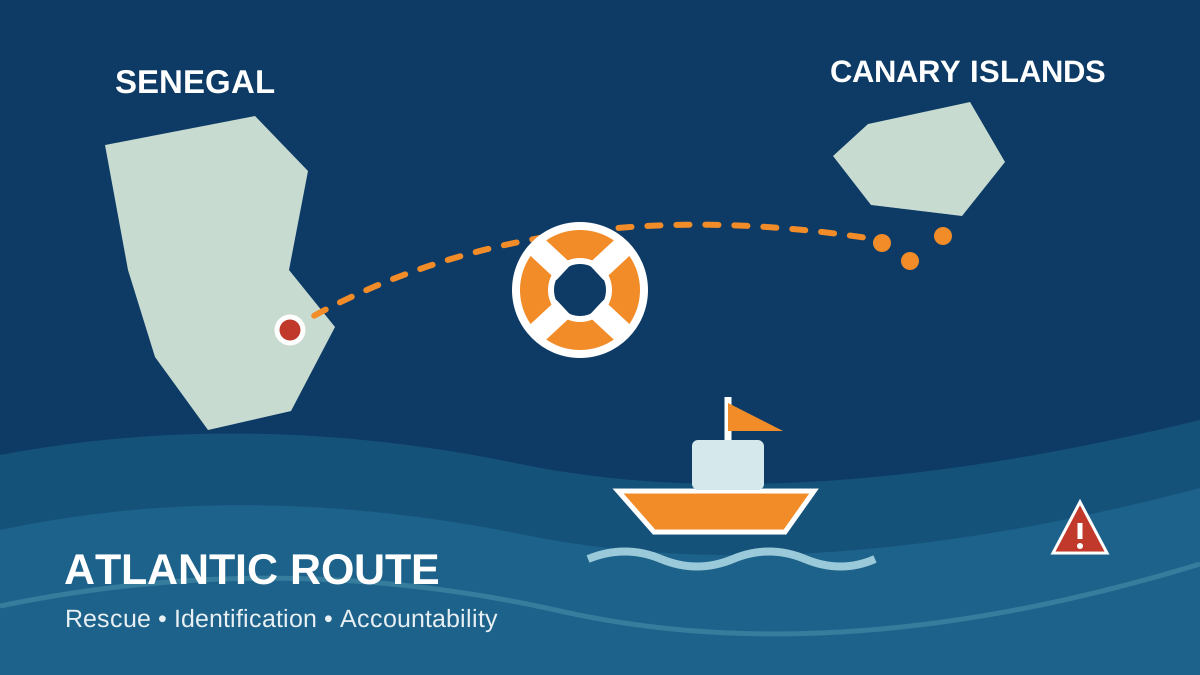
The Canary Islands lie off northwest Africa, but crossings originate from multiple coastlines and involve journeys of different distances. EFE reported vessels arriving from Senegalese departure points, while Le Monde described changes in departure patterns and the seasonal conditions that can affect the route. Those wider observations offer context, not a verified itinerary for everyone on the lost boat. There is no basis for assuming that people rescued near El Hierro traveled with, knew, or departed alongside the victims near Lompoul. Treating these distinct journeys as one event would erase both individual experience and basic statistical limits.
Sources: Las 5.857 llegadas de noviembre le dan la vuelta un año que parecía de contención en la Ruta Canaria · El Gobierno de España acuerda ampliar recursos con la declaración de la Emergencia Migratoria en Canarias y trasladar una guardamar más a El Hierro · Thousands of African migrants arrive in the Canary Islands, 'state of emergency' declared on one of the islands
What a credible next update must show
The immediate priority in Senegal remains a verifiable account of the people involved. That would require authorities to distinguish bodies recovered, individuals identified, relatives notified, confirmed survivors and unresolved missing-person reports, with clear reporting dates. Search updates should also identify the responsible service and explain what is known about the original alert and rescue chronology. The existing inquiry may eventually establish evidence about the vessel and the circumstances of its loss; until then, no cause or liability finding should be presented as settled. For families, transparency cannot restore lives, but it can reduce prolonged uncertainty.
In Spain, the next test is whether announced rescue assets, reception places, healthcare support and transfers translate into accessible assistance during continuing arrivals. Public reporting should specify which resources have actually been deployed and how services on El Hierro are coping, rather than treating an emergency declaration as a completed response. The Atlantic route's two sides cannot be reduced to a single headline figure: 39 confirmed deaths in one still-open case, and thousands of arrivals in another jurisdiction. The common challenge is to make rescue, identification and institutional decisions visible enough to examine.
Sources: Naufrage au large de Lompoul : le bilan passe à 39 morts (officiel) · Naufrage au large de Lompoul : le ministre de l’Intérieur au chevet des victimes · Las 5.857 llegadas de noviembre le dan la vuelta un año que parecía de contención en la Ruta Canaria · El Gobierno de España acuerda ampliar recursos con la declaración de la Emergencia Migratoria en Canarias y trasladar una guardamar más a El Hierro · Thousands of African migrants arrive in the Canary Islands, 'state of emergency' declared on one of the islands