Three percentages can make a model launch sound like a solved engineering problem. Google introduced Gemini 4 Carbon on 28 October 2026, placing cybersecurity and long-running coding work at the center of its pitch. The company reported strong scores across vulnerability discovery, exploitation tests and patching. But a benchmark score, even a striking one, does not tell a security team how often a tool will behave safely in its own systems, or when developers outside the initial rollout can use it. The more useful story is what these results measure—and what decisions they cannot make for us.
What Google actually announced
Google described Carbon as a new frontier model aimed at demanding coding tasks and cybersecurity work. The company says it improves on Gemini 4 Argon and can stay engaged with complex software-engineering problems for extended periods in internal testing. These are product announcements and company-reported observations, not proof that every customer can run such workloads today.
The initial release is deliberately restricted. Google said it would first provide access to a subset of cyber defenders, expanding to additional trusted partners through its Fairwind Program while safety work continues. Developers and ordinary users were promised broader access later, without a firm general-availability date in the announcement.
Reuters also reported the new release and its cyber-defense focus. Independent coverage confirms that an announcement occurred; it does not independently reproduce Google's technical benchmarks.
Sources: Gemini 4 Carbon: our next frontier model · Google launches Gemini 4 Carbon AI model with cybersecurity focus
Three different security tasks, not one magic number
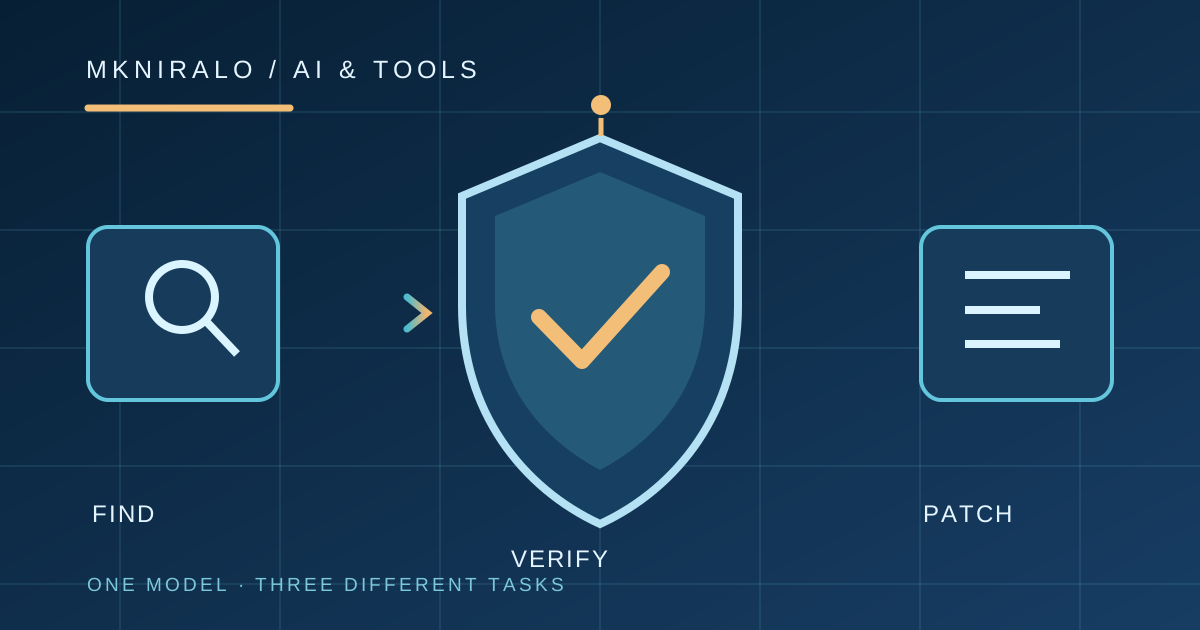
Google reported 88.2% on SEC-bench Pro for vulnerability finding, 54.8% on ExploitGym for exploitation-related validation, and 71.0% on CWE-bench for producing fixes. These figures are scores on different evaluation sets. They cannot be added together, averaged into a universal 'security accuracy' number, or treated as a probability that an arbitrary production vulnerability will be handled correctly.
Finding a plausible weakness, confirming whether it matters, and producing a robust patch are distinct operations. A model might succeed at one step and fail the next. A patch might satisfy a narrow test while introducing compatibility issues or security regressions elsewhere. The implication for a real software team is to measure the whole remediation process rather than displaying a single model score.
The published launch post does not provide a complete independent reproduction package for every claim. Until methods, tasks and conditions can be scrutinized, these results are best described as Google's reported benchmark performance.
Sources: Gemini 4 Carbon: our next frontier model · Google announces Gemini 4 Carbon with significant coding gains
What does a cybersecurity benchmark leave out?
An evaluation is valuable because it creates a repeatable task, but it necessarily simplifies a messy workplace. Production code contains incomplete documentation, unusual dependencies, complex approval paths and operational trade-offs that may not be captured by a benchmark task. A tool can also be fast at producing a patch and still misunderstand what change is safe to release.
For engineering teams, useful questions include whether an agent asks for missing context, respects repository and tool permissions, cites the code paths it inspected, and produces a testable account of the changes it made. Those are workflow properties, not simply model properties.
Google also reported internal improvements in secure-code generation and reductions in unsupported claims. Such statements should remain attributed to the company until evaluated under conditions relevant to an independent customer's use.
Sources: Gemini 4 Carbon: our next frontier model · Google announces Gemini 4 Carbon with significant coding gains
Why limited access is part of the story
The model's ability to reason about vulnerabilities may support defense, but capabilities used to validate weaknesses can also be misused. Google says the rollout will begin with a limited group of defenders alongside further safeguards testing. That is an access decision, not an indication that the model is generally available in a public product or API.
The commercial terms also require care. Google advertised introductory token prices, but a posted price does not mean anyone can immediately purchase unrestricted access. The practical questions are who is eligible, which interface is offered, what guardrails apply, and when the introductory period ends.
For teams comparing tools this week, a model they cannot yet use should be evaluated as a future candidate rather than listed alongside accessible services as though both have passed an identical internal pilot.
Sources: Gemini 4 Carbon: our next frontier model · Google launches Gemini 4 Carbon AI model with cybersecurity focus · Google announces Gemini 4 Carbon with significant coding gains
A better way to read the safety claims
Google highlighted prompt-injection resistance, fewer unsupported assertions, and better behavior when instructions are ambiguous. It reported these improvements from its selected evaluations and internal coding environments. Those results are worth studying, but not a blanket guarantee against every malicious input, incorrect action or unsafe automation pathway.
A defensible assessment would test the actual chain of work: repository access, credential boundaries, tool calls, approval checkpoints, change review, testing and rollback. It would record the failures as carefully as the successes. A model might resist a prompt-injection scenario yet still make an ordinary reasoning error that affects a production system.
The important comparison is therefore not 'which model has the most reassuring launch chart?' but 'which workflow prevents an unchecked suggestion from becoming a costly action?'
Sources: Gemini 4 Carbon: our next frontier model · Google announces Gemini 4 Carbon with significant coding gains
What to watch before wider rollout
The next significant evidence will be documented access expansion, independent evaluation, detailed deployment guidance and reports from genuine user environments. Developers should be alert to changes in pricing, usage limits and safeguards rather than assuming launch-day terms will remain fixed.
Carbon is a noteworthy engineering announcement, especially for security workflows that combine code search, reasoning and patch proposals. It does not eliminate the need for human review or prove that automatic vulnerability remediation is solved. Stronger AI changes what teams can attempt; measured, accountable deployment determines what they should trust.
Sources: Gemini 4 Carbon: our next frontier model · Google launches Gemini 4 Carbon AI model with cybersecurity focus · Google announces Gemini 4 Carbon with significant coding gains