Moldova marked a consequential electricity-infrastructure milestone on Sunday, November 8: the 400-kilovolt Vulcănești–Chișinău overhead transmission line and its associated substations were energized. The Energy Ministry announced the event at a ceremony attended by President Maia Sandu and European Commissioner Marta Kos. For a country exposed to disruptions on regional supply routes, the achievement is physical and important. But switching on a line is not yet proof of uninterrupted commercial operation, lower consumer bills or lasting insulation from external shocks.
What was actually switched on?
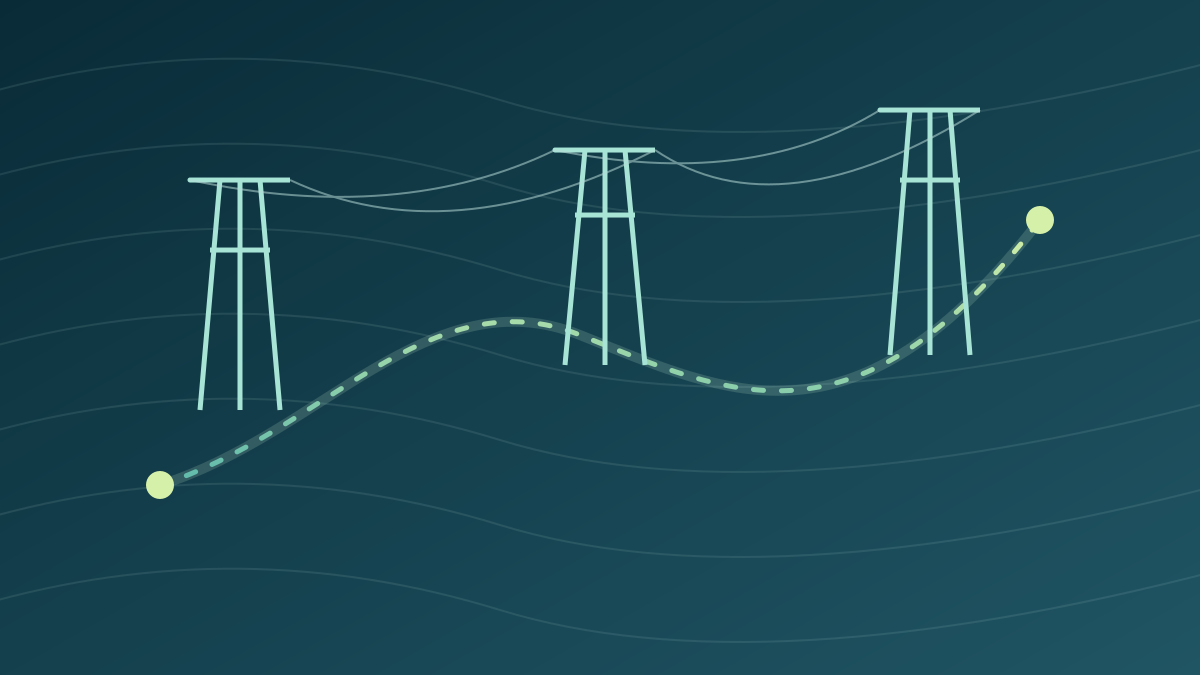
The project comprises a roughly 157-kilometre, single-circuit, 400-kilovolt overhead line running between the Vulcănești and Chișinău substations, crossing 35 localities. It also includes work on the Chișinău substation and expansion of the Vulcănești substation. The ministry used the Romanian phrase *pusă sub tensiune*—energized—to describe the milestone; this is not, by itself, a certificate establishing routine commercial service.
The project's route links infrastructure in the country's south to the capital-area network. It is therefore misleading to describe it as a brand-new line running directly across the Romanian border. The broader effect is to improve Moldova's ability to receive and move electricity from connections with Romania and the wider European market, reducing dependence on older internal routes. A government update in October described the line as linking a 400-kilovolt substation at Vulcănești with a 330-kilovolt one at Chișinău. The two voltage ratings are not interchangeable, and neither should be confused with a power-flow figure measured in megawatts.
Sources: Linia electrică Vulcănești–Chișinău a fost pusă sub tensiune · Moldovan PM visits Chisinau Electrical Substation, in final preparation stage
Why energization is not the final operating test
Before the ceremony, Energy Minister Dorin Junghietu set out a sequence of acceptance checks, energization, tests with the system under voltage and subsequent load tests. His November 2 remarks were a plan for the final stages, not proof that all of them would be finished on November 8. The November 8 ministry announcement confirms the energization step.
That distinction is consequential for anyone reading claims of “energy independence.” A high-voltage corridor can be physically ready without demonstrating how much electricity it can reliably transmit in every operating condition. A stated design capacity, when published, is not the same as measured flows during a winter peak or an outage. The most informative follow-up would be a dated operator confirmation of normal operations, technical limits and comparable reliability data rather than another inauguration photograph.
Sources: Linia electrică Vulcănești–Chișinău a fost pusă sub tensiune · Vulcănești–Chișinău power line will be operational next week
Why a domestic transmission route matters internationally
Electricity does not become secure simply because a country can buy it from several suppliers. It must also be transported through a network capable of handling imports, internal demand and unexpected outages. Moldova has faced exactly this problem. A disruption in March 2026 to the Isaccea–Vulcănești connection, following attacks in neighboring Ukraine, prompted an energy-sector emergency. That episode illustrated the exposure created when critical supply routes and neighboring networks are disrupted. The new northbound transmission route is designed to give system operators more flexibility, not immunity from every interruption.
Moldova's electricity infrastructure reflects decades of regional integration under a different political and economic order. The Cuciurgan power station in the breakaway Transnistria region has long been an important component of that system. The government says the new line reduces vulnerability associated with reliance on the Cuciurgan node. That is an official policy assessment; how much the vulnerability falls in practice depends on dispatch, market conditions, the availability of imports and the performance of the grid as a whole.
Sources: Linia electrică Vulcănești–Chișinău a fost pusă sub tensiune · „Dependenţa de energia rusească este cu adevărat încheiată”. R. Moldova a inaugurat o nouă linie electrică · Moldovan parliament backs energy state of emergency after power line put out of action · Moldova inaugurates strategic Vulcănești–Chișinău power line
The political message—and its limits
At the ceremony, Sandu framed the line as part of Moldova's ability to choose where it purchases electricity. Kos described it as a step toward a safer and better-connected national network. Both statements are significant as descriptions of government priorities, but neither is a measurement of energy independence. A line cannot generate power, guarantee lower retail prices, or ensure that all electricity will be produced outside Russia. Energy import contracts, the origin and price of generation, and the risk of regional market shocks remain separate questions.
The inauguration also sits within Moldova's wider relationship with the European Union. The European Commission had announced Kos's November 8–10 visit as part of discussions on accession, economic development and regional connectivity. The physical investment and the diplomatic message reinforce each other, but they are different stories: the infrastructure has been energized, while EU membership and market integration remain processes with separate legal and technical steps.
Sources: Linia electrică Vulcănești–Chișinău a fost pusă sub tensiune · „Dependenţa de energia rusească este cu adevărat încheiată”. R. Moldova a inaugurat o nouă linie electrică · Commissioner Kos in Moldova to discuss EU accession and strengthen regional connectivity · Moldova inaugurates strategic Vulcănești–Chișinău power line
Who paid for the work, and what remains to be demonstrated?
The Energy Ministry credits support from the World Bank Group and Moldova's government. The beneficiary is the state electricity transmission operator Moldelectrica and, ultimately, electricity users. The October government update placed the project within the Power System Development Project financed by the World Bank. The government reported on October 19 that a transformer returned from repair in Spain had been installed and tested while comprehensive final checks at the Chișinău substation continued. This is a reminder that the overhead line is only one part of a functioning system.
The next useful figures are operational rather than ceremonial: a formal operational-service status, any permitted transfer limits during normal and contingency conditions, recorded energy flows, and measured changes in interruptions or congestion. The ministry's November 8 announcement did not publish all those measures. It would be premature to attach a precise reduction in household bills, an outage probability, or an energy-import share to the inauguration alone. The credible claim today is narrower: a strategically important piece of infrastructure has been energized and publicly inaugurated.
Sources: Linia electrică Vulcănești–Chișinău a fost pusă sub tensiune · Vulcănești–Chișinău power line will be operational next week · Moldovan PM visits Chisinau Electrical Substation, in final preparation stage
What residents and neighboring countries should watch next
For residents, the most meaningful test is whether the new route improves supply reliability during winter peaks and future disturbances. For businesses, the practical questions concern predictable electricity access and costs. For Romania and the wider European system, the line adds a new element to an increasingly interconnected region, but effective cross-border trade still requires adequate supply, transmission capacity, system coordination and workable market arrangements. None of those outcomes can be read from the physical length of a cable alone.
Moldova's government has indicated that additional lines toward Romania are planned. Plans should remain labeled as plans until procurement, construction, testing and energization can be verified independently. Those proposed connections should not be confused with the now-energized domestic corridor. The November 8 ceremony marks genuine progress, but the longer test is whether the grid can deliver consistent electricity when winter demand and network disturbances put it under strain.
Sources: Linia electrică Vulcănești–Chișinău a fost pusă sub tensiune · „Dependenţa de energia rusească este cu adevărat încheiată”. R. Moldova a inaugurat o nouă linie electrică · Moldovan parliament backs energy state of emergency after power line put out of action · Moldova inaugurates strategic Vulcănești–Chișinău power line