← All topics and series CATEGORY

Science

Explore reporting, explainers and practical guides about Science. Tags help narrow the subject, while series pages bring related developments together over time.

Latest Science stories

8 articles
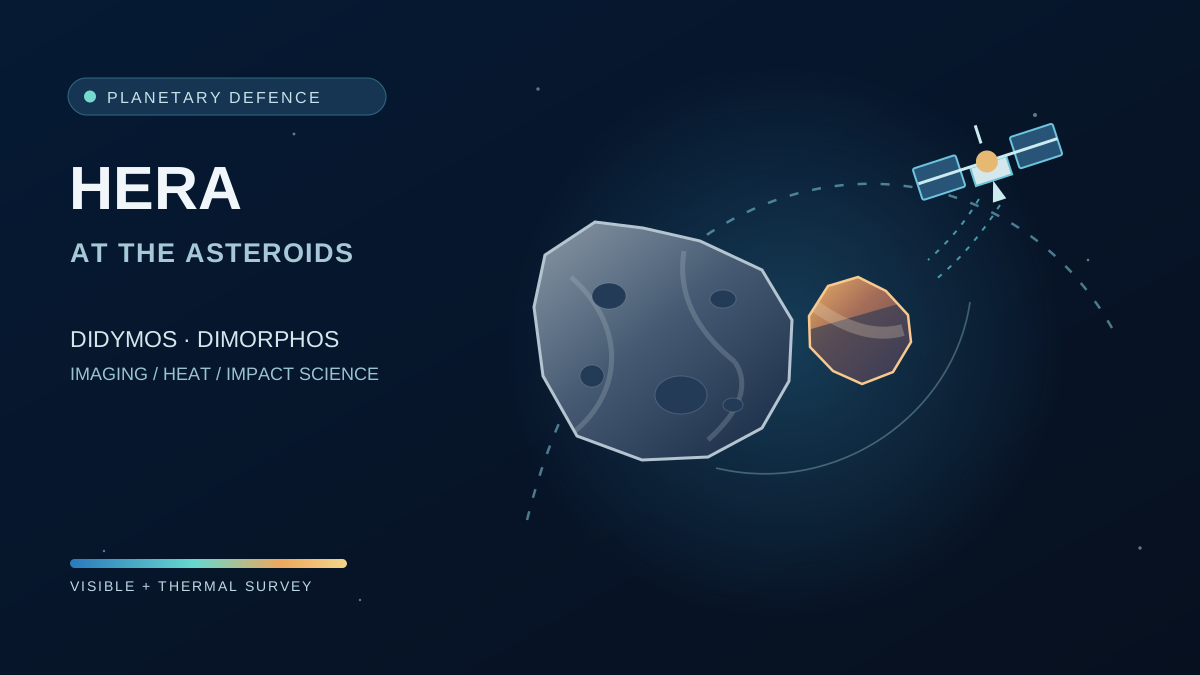
Original abstract editorial illustration: two rough-surfaced asteroid shapes, a small spacecraft and scientific sensing arcs on a deep-blue background.
Science • PLANETARY DEFENCE / HERA ARRIVAL

Hera Reaches the Asteroids DART Changed, With New Images and Heat Data

ESA’s Hera has reached Didymos and Dimorphos, with new close-up views and JAXA thermal images showing the smaller asteroid cooling in shadow. The mission now investigates what NASA’s DART impact changed.

Hera MissionDidymos
6 min read ↗
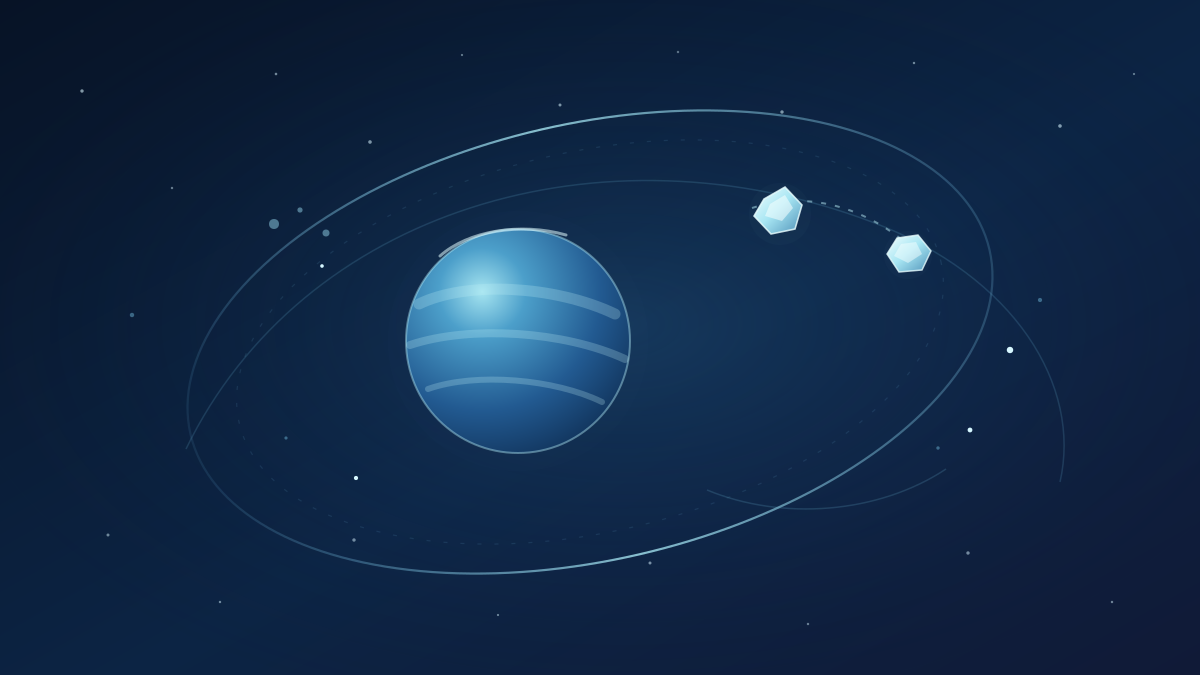
An abstract orbital arc curves around a blue planetary sphere, with two pale icy bodies and a faint field of stars suggesting Neptune’s trailing Trojan cloud.
Science • Space · Solar System

Rubin Observatory Brings Neptune’s Long-Hidden Trojan Cloud Into View

Two newly confirmed asteroids and a candidate in Neptune’s trailing Trojan cloud offer the clearest view yet of a population long obscured by the crowded star fields toward the Milky Way’s centre.

Neptune TrojansRubin Observatory
6 min read ↗
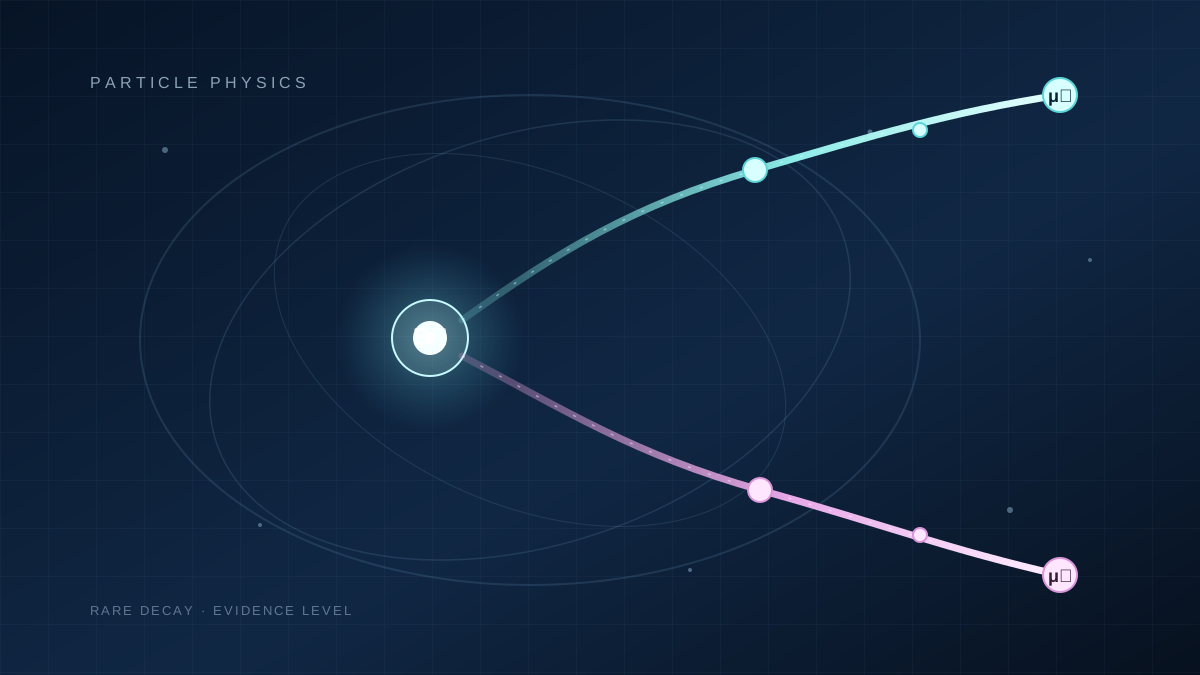
Abstract scientific illustration showing a neutral B meson transforming into two oppositely charged muon tracks, with luminous particle paths and detector geometry on a dark field.
Science • CERN · Particle Physics

LHCb Finds Evidence of a One-in-Ten-Billion Particle Decay

LHCb has found evidence for a B⁰ meson decaying into two muons, a process expected roughly once in ten billion decays. The combined signal reaches 3.2 sigma, but it is evidence, not a discovery.

CERNLHCb
6 min read ↗
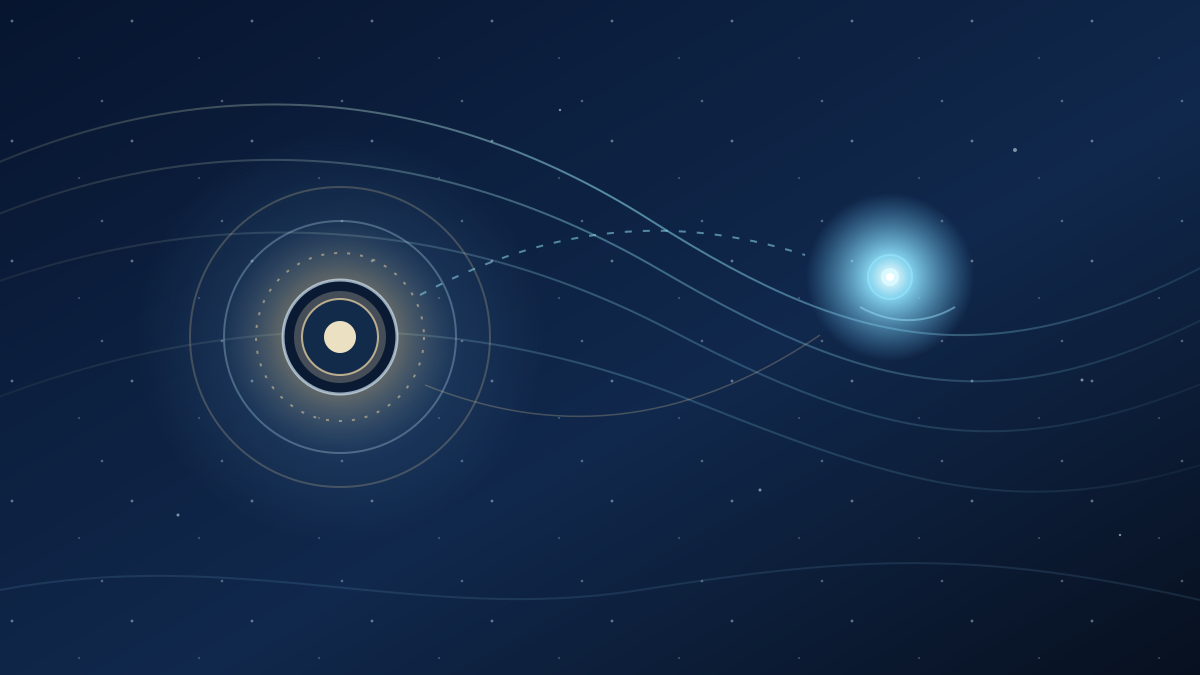
Original abstract vector illustration: a bright masked star glows behind concentric coronagraph rings on the left, while a small distant planet emerges on the right against a deep navy field, linked by faint optical wavefront arcs; no telescope photograph or real astronomical image is depicted.
Science • Astronomy · Exoplanets

JWST’s FLIP Method Reveals 51 Eridani b in Existing Data

A physics-based image-processing method has recovered a known giant planet from JWST observations that standard starlight subtraction left unresolved.

AstronomyExoplanets
6 min read ↗
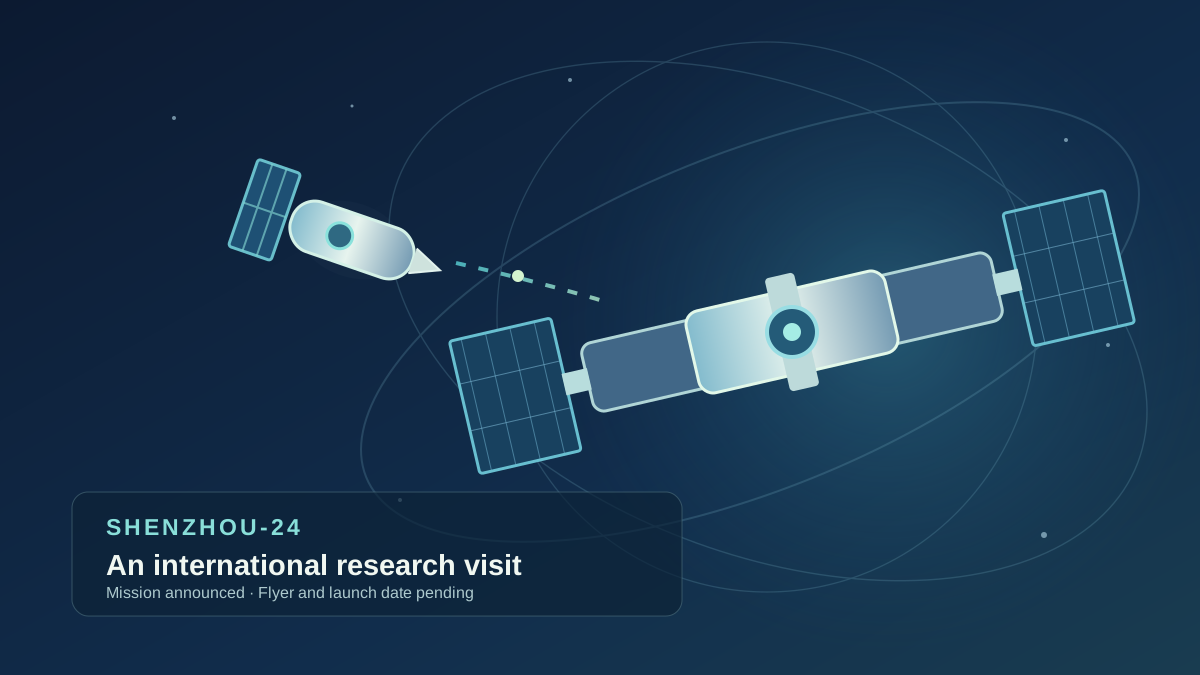
Original abstract editorial vector illustration of a small research module approaching a larger orbital station inside intersecting orbital paths. The geometry symbolizes international crew cooperation and a short scientific visit; no flags, maps, official insignia, real spacecraft imagery, portraits, logos, or third-party artwork.
Science • PAKISTAN / CHINA / SPACEFLIGHT

Pakistan’s Astronaut Will Join Shenzhou-24, but China Has Not Named the Flyer or Launch Date

China has confirmed a Pakistani payload specialist for Shenzhou-24 and a return aboard Shenzhou-23. The astronaut’s identity and the launch date remain officially unannounced.

Shenzhou-24Tiangong
6 min read ↗
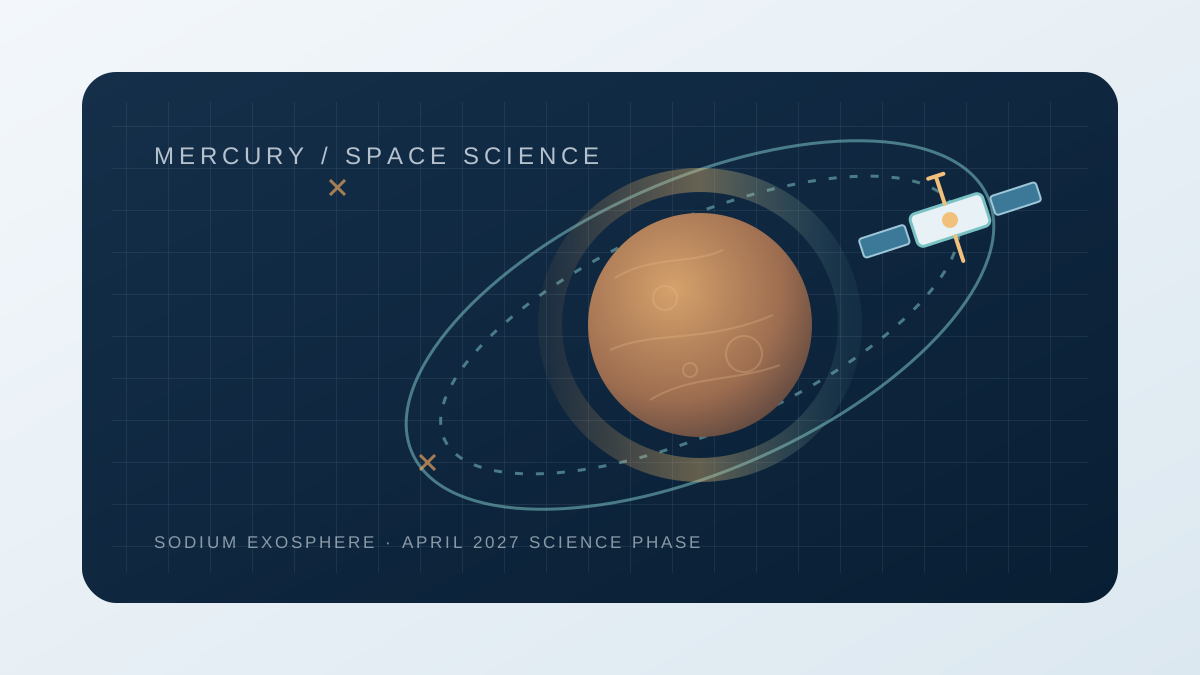
Original editorial illustration of a Mercury orbiter following a polar orbital path through a faint sodium exosphere, with the Sun represented as an abstract light source.
Science • SPACE SCIENCE | MERCURY EXPLORATION

Mio’s Mercury Science Phase Is Set for 2027. What Will It Actually Image?

Mio’s science observations are scheduled to begin in April 2027. Its MSASI instrument will map sodium in Mercury’s ultra-thin exosphere—not take conventional surface photographs—and no public first-image date has been specified.

MercuryBepiColombo
6 min read ↗
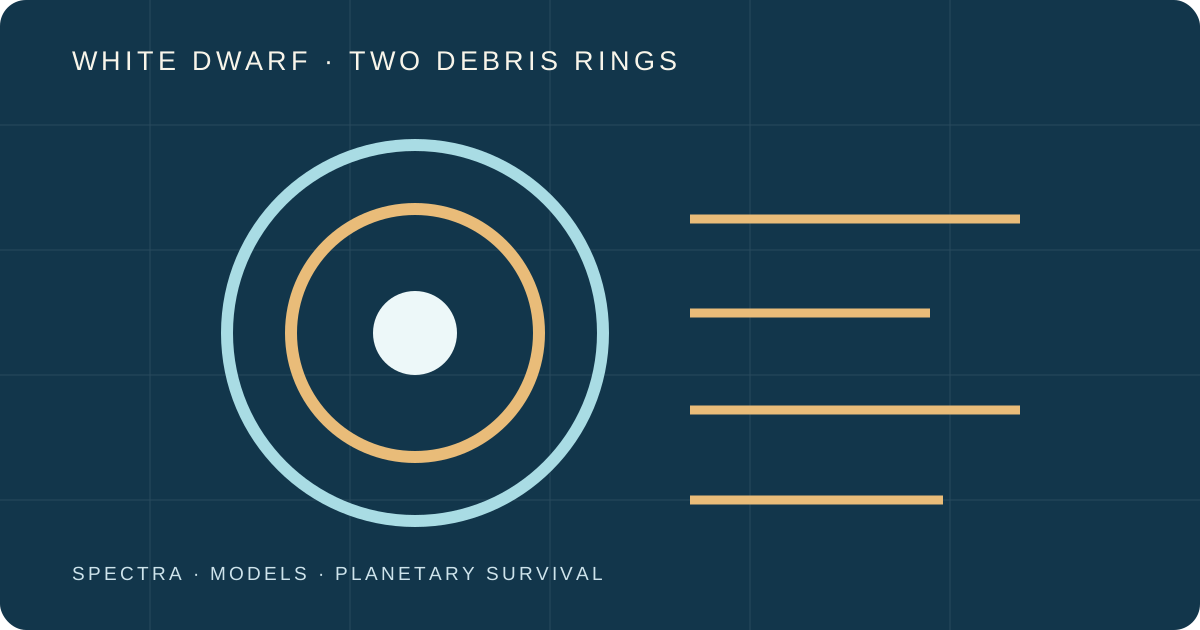
Original abstract white star with two concentric rings and a gap, not an actual telescope image
Science • ASTRONOMY / PLANETARY SYSTEMS

A Dead Star Has Two Debris Rings. Are Surviving Planets Keeping Them Apart?

ESO researchers observed two separated gas rings around white dwarf J1328−1450. Unseen rocky bodies may explain the gap, but the planets themselves have not been directly imaged.

White DwarfAstronomy
9 min read ↗
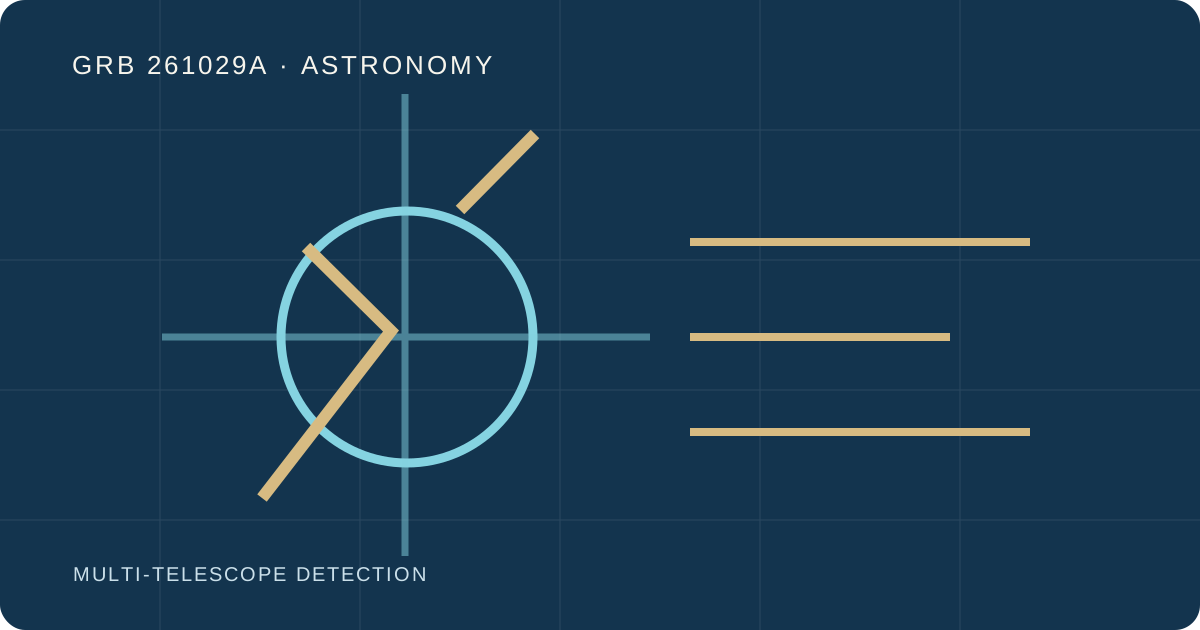
Original abstract illustration of a bright cosmic burst and converging telescope observation lines
Science • SPACE SCIENCE / ASTRONOMY

One Gamma-Ray Burst, Many Telescopes: What GRB 261029A Really Tells Scientists

A 29 October gamma-ray burst was recorded by Fermi, SVOM and other observatories. Early spectra suggest redshift 3.27, but preliminary measurements are not a final explanation of the explosion.

AstronomyGamma-Ray Burst
9 min read ↗